Announcing Our Next Open-Source Initiative: Building AI Applications with the Claude API Using Ruby & Ruby on Rails
Introducing: Building AI Applications with the Claude API Using Ruby & Ruby on Rails
Read moreIntroducing: Building AI Applications with the Claude API Using Ruby & Ruby on Rails
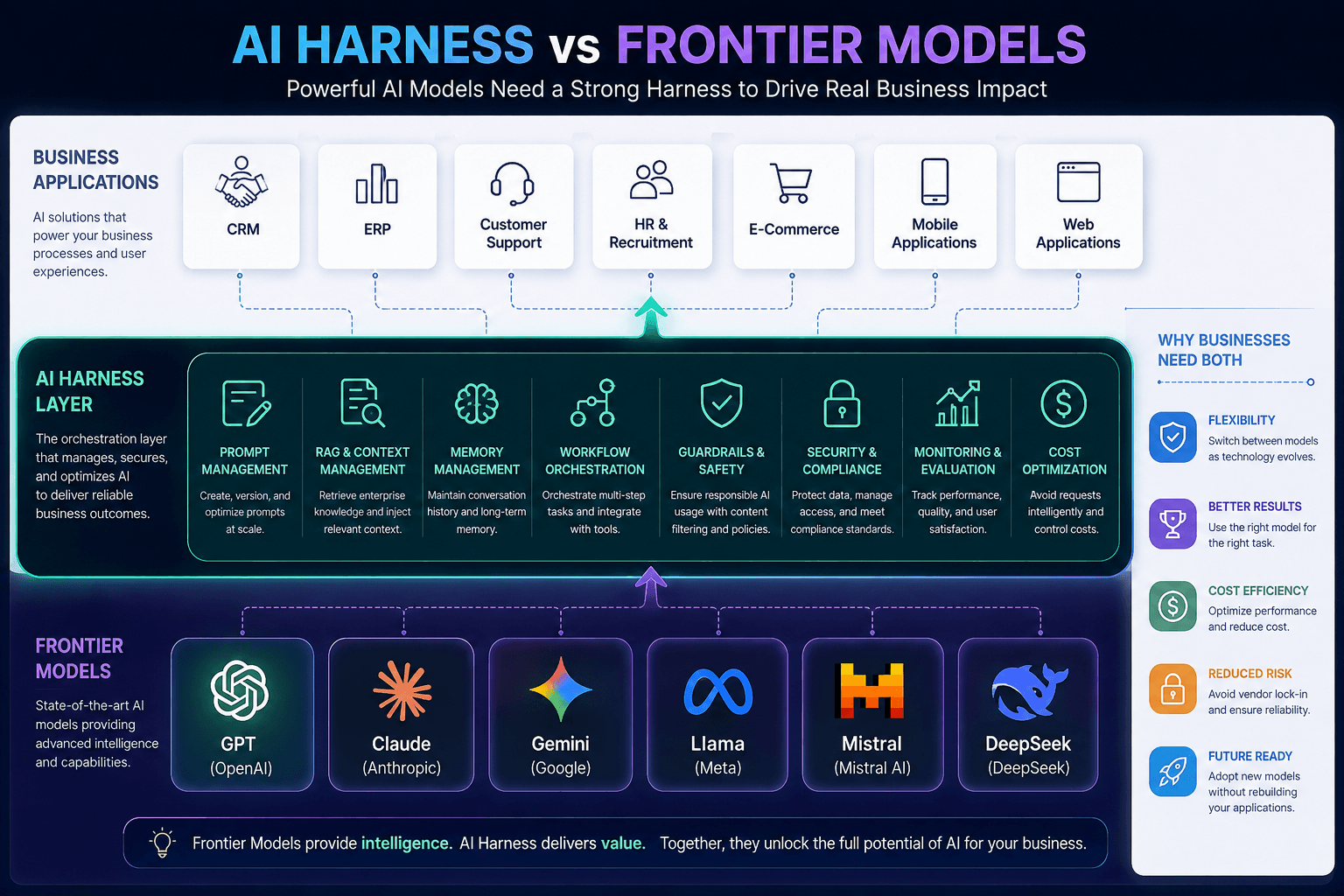
Read moreArtificial Intelligence is evolving at an incredible pace. Every few months, a new "most powerful" AI model is announced, capable of writing code, generating content, solving complex problems, or even acting as an autonomous agent. While these frontier models receive most of the attention, successful AI implementations inside businesses rely on something equally important—an AI Harness. Understanding the distinction can help organizations avoid expensive AI mistakes and build scalable, secure, and future-ready AI solutions.
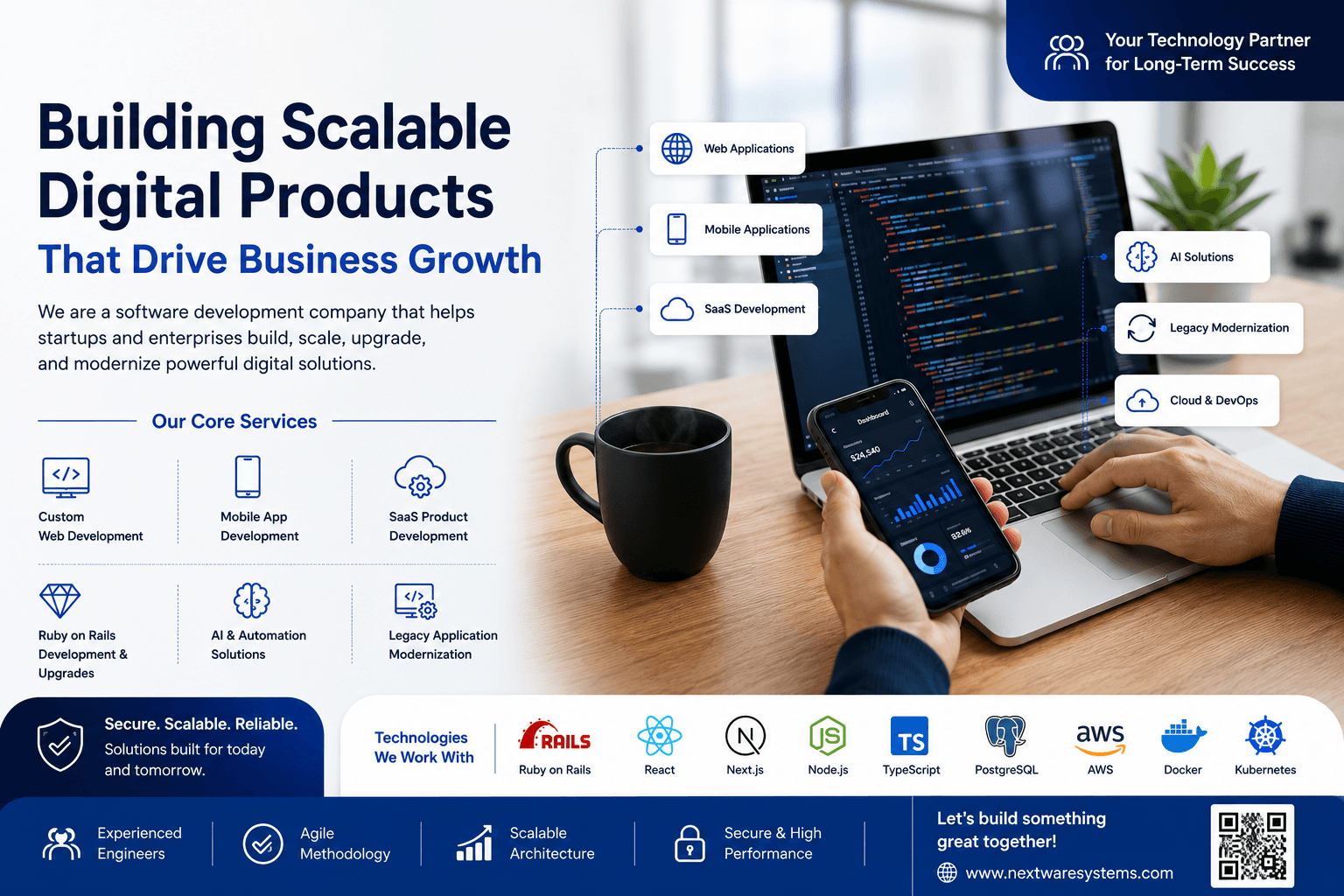
Read moreBuilding Digital Products That Scale: Why Businesses Choose Nextware Systems as Their Technology Partner
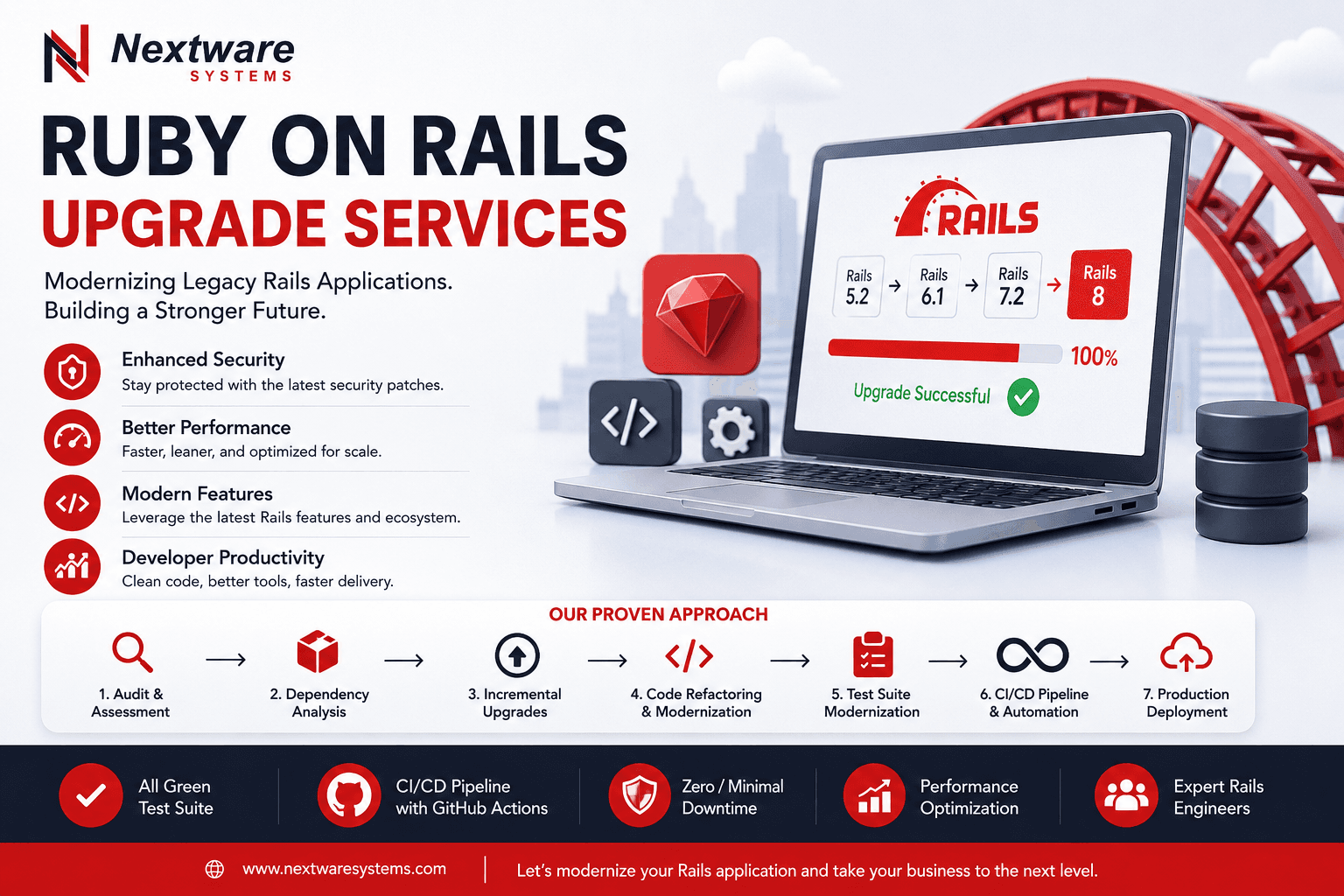
Read moreIs Your Ruby on Rails Application Falling Behind?
Read moreWhen to reach for a Turbo Frame, when to broadcast a Turbo Stream, and how to keep a Hotwire app fast and debuggable.
Read moreRails monoliths scale further than the internet admits. Service objects, good indexes, and background jobs get you remarkably far.
Read morepgvector, Pinecone, Qdrant, Weaviate — how to pick a vector store based on scale, filtering needs, and operational appetite.
Read moreLangChain helps compose LLM steps, tools, and memory. Where it helps, where it gets in the way, and how to keep chains debuggable.
Read moreRSC changes where code runs. A working mental model for fetching, the client boundary, and shipping less JavaScript.
Read moreServing different apps or tenants by hostname — middleware rewrites, local development with .localhost, and production DNS.
Read moreDiscriminated unions, branded types, and inference-friendly APIs — the handful of TS patterns worth the extra keystrokes.
Read moreTypes vanish at runtime. Validate untrusted input with Zod at the boundary and infer your types from the schema.
Read moreStatic, dynamic, and incremental — choosing a rendering strategy per route, and using revalidate and tags effectively.
Read moreAI assistants speed up the right tasks and slow down the wrong ones. How senior engineers actually use them well.
Read moreMCP standardises how AI apps connect to tools and data sources. Why a common protocol matters and how servers and clients fit together.
Read moreNaive RAG is easy; good RAG is mostly retrieval engineering. Chunking, hybrid search, reranking, and evaluation that actually moves quality.
Read moreAgents turn a language model into a system that plans, calls tools, and acts. What actually makes an agent reliable in production.
Read moreContainerize once and deploy anywhere you can SSH. Kamal brings zero-downtime deploys and TLS to a cheap server.
Read moreSolid Queue brings durable, database-backed jobs to Rails by default. Setup, recurring tasks, and when you still want Sidekiq.
Read moreRails 8 ships with Kamal 2, Solid Queue, Solid Cache and Propshaft, making a database-only, deploy-anywhere stack the default. Here is what changes.
Read more