TypeScript Patterns That Actually Pay Off
Discriminated unions, branded types, and inference-friendly APIs — the handful of TS patterns worth the extra keystrokes.

TypeScript rewards a few patterns far more than the rest. These are the ones worth reaching for daily, and they make whole categories of bugs unrepresentable.
Discriminated unions
Model state machines and API responses as unions with a shared tag. The compiler then forces you to handle every case and narrows types automatically inside each branch.
type Result =
  | { status: 'ok'; data: Post[] }
  | { status: 'error'; message: string };
Branded types
Wrap primitive ids in branded types so a UserId can never be passed where a PostId is expected. It is a tiny amount of ceremony for a meaningful class of caught bugs.
Let inference work
Design functions so callers rarely annotate types by hand. Good inference makes the safety feel free, which is what keeps a team actually using it.
Why this matters in real projects
It is easy to treat typescript as a checkbox, but in production the details decide whether a system stays maintainable. Teams that invest early in getting typescript right spend far less time later untangling incidental complexity, because the foundations hold up as the codebase and the team grow.
In the context of typescript, the cost of a poor decision compounds quietly. A shortcut that saves an afternoon can cost weeks once it is woven through dozens of files and several people's mental models. The patterns described above are popular precisely because they keep that compounding cost in check and keep change cheap.
There is also a human dimension that is easy to overlook. Code is read far more often than it is written, and the clarity of your approach to typescript directly shapes how quickly a new teammate becomes productive. When the structure mirrors how people already think about the problem, onboarding shrinks from weeks to days and reviews become conversations about intent rather than archaeology.
Going deeper
Once the basics are in place, the next gains come from understanding the trade-offs rather than memorising rules. TypeScript is not free: every abstraction you introduce buys flexibility in one direction while adding a layer to reason about in another. The teams that do this well make those trade-offs consciously, write them down, and revisit them when the constraints change. That habit of deliberate decision-making is what separates a codebase that ages gracefully from one that calcifies.
It helps to keep a short feedback loop between a change and its effect. Whether that loop is a fast test suite, a metric on a dashboard, or a teammate's review, the goal is the same: shorten the distance between a decision and the evidence about whether it was a good one. When that distance is small, you can move quickly with confidence; when it is large, even careful teams drift.
How this fits a modern stack
TypeScript rarely lives in isolation. In a typical Nextware project it sits alongside a typed full-stack codebase, a CI pipeline that runs on every pull request, and a deployment process that favours small, frequent releases over big-bang launches. The ideas in this article are written with that reality in mind, so they slot into an existing workflow rather than demanding a rewrite.
The combination of typescript and type safety, applied with restraint, tends to produce systems that are both pleasant to work in and cheap to change. That is the bar worth aiming for: not the cleverest possible solution, but the one your team can extend safely a year from now without rediscovering why every decision was made.
Common pitfalls to avoid
Most of the trouble we see is not exotic. It comes from a small set of recurring mistakes that are obvious in hindsight and invisible under deadline pressure.
- Optimising before measuring — changing typescript based on a hunch instead of a profile or a metric.
- Hidden coupling — letting type safety leak across boundaries until nothing can change in isolation.
- Skipping tests for the parts that matter most, then paying for it during the next refactor.
- Copying a pattern from a much larger company without their constraints, and inheriting the overhead without the benefit.
A practical checklist
- Write down the problem you are actually solving before reaching for typescript.
- Start with the simplest approach that could work, and add structure only when a real pain appears.
- Make the change observable — logs, metrics, or tests — so you can tell whether it helped.
- Document the decision briefly so the next person understands the trade-off.
Key takeaways
- TypeScript rewards simplicity; complexity should be earned, not assumed.
- TypeScript and Type Safety pay off most when applied deliberately at the right boundary.
- Measure, then optimise — never the other way around.
- Optimise for the team that maintains this in six months, including future you.
Wrapping up
None of this requires heroics. The teams that ship reliable software are usually the ones that keep their tools boring, their boundaries clear, and their feedback loops fast. Apply the ideas here incrementally, keep what works for your context, and discard what does not.
If you are building something in this space at Nextware Systems or elsewhere, the best next step is to pick one concrete improvement from the checklist above and ship it this week. Small, measured changes compound into systems that are a pleasure to work in — and that is the whole point.
Related posts

Zod and Runtime Validation at the Edges of Your App
Types vanish at runtime. Validate untrusted input with Zod at the boundary and infer your types from the schema.
Read moreAnnouncing Our Next Open-Source Initiative: Building AI Applications with the Claude API Using Ruby & Ruby on Rails
Introducing: Building AI Applications with the Claude API Using Ruby & Ruby on Rails
Read more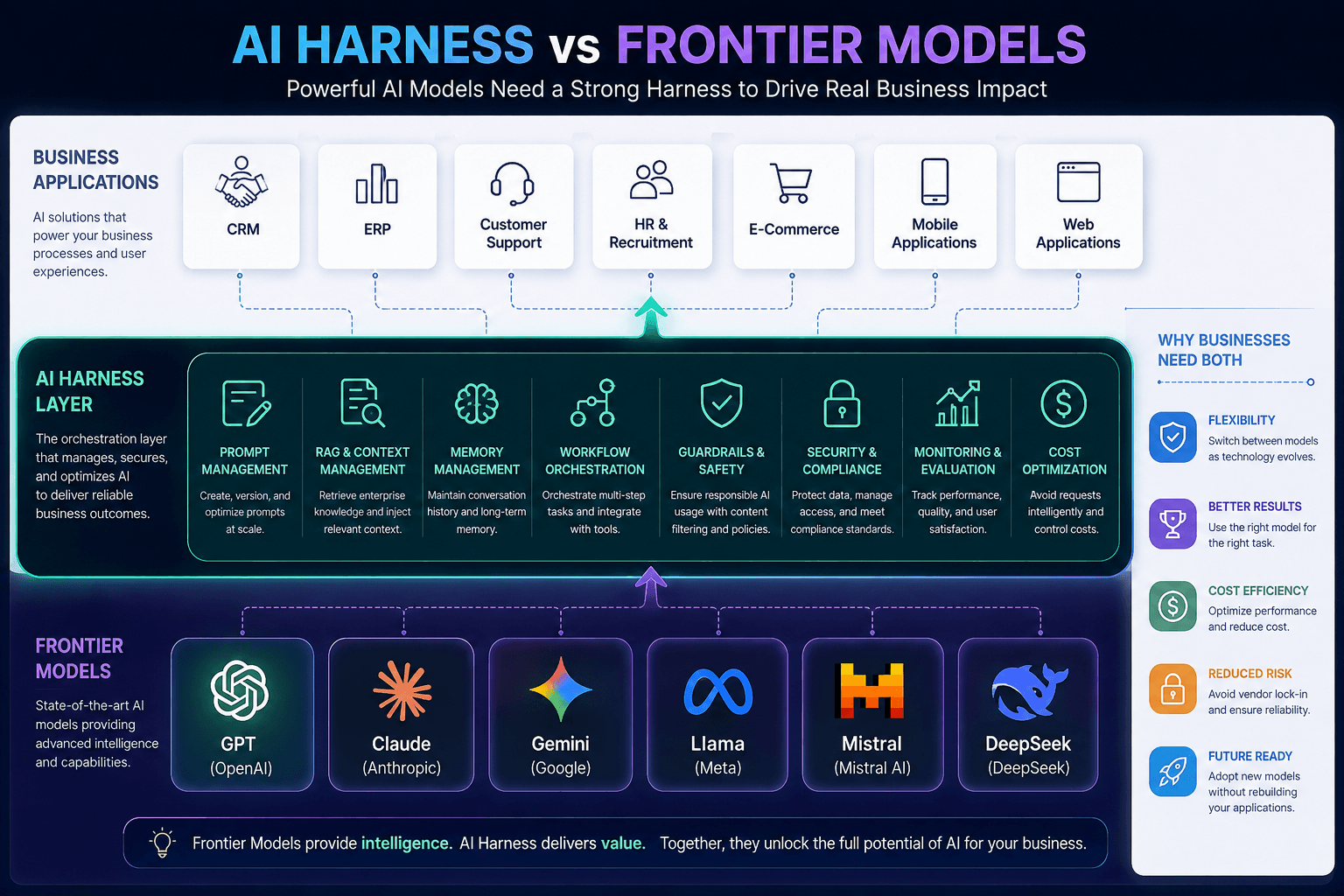
AI Harness vs Frontier Models: Why Enterprises Need More Than Just Powerful AI
Artificial Intelligence is evolving at an incredible pace. Every few months, a new "most powerful" AI model is announced, capable of writing code, generating content, solving complex problems, or even acting as an autonomous agent. While these frontier models receive most of the attention, successful AI implementations inside businesses rely on something equally important—an AI Harness. Understanding the distinction can help organizations avoid expensive AI mistakes and build scalable, secure, and future-ready AI solutions.
Read moreTrending posts
Announcing Our Next Open-Source Initiative: Building AI Applications with the Claude API Using Ruby & Ruby on Rails
Introducing: Building AI Applications with the Claude API Using Ruby & Ruby on Rails
Read moreAI Harness vs Frontier Models: Why Enterprises Need More Than Just Powerful AI
Artificial Intelligence is evolving at an incredible pace. Every few months, a new "most powerful" AI model is announced, capable of writing code, generating content, solving complex problems, or even acting as an autonomous agent. While these frontier models receive most of the attention, successful AI implementations inside businesses rely on something equally important—an AI Harness. Understanding the distinction can help organizations avoid expensive AI mistakes and build scalable, secure, and future-ready AI solutions.
Read more
Building Digital Products That Scale: Why Businesses Choose Nextware Systems as Their Technology Partner
Building Digital Products That Scale: Why Businesses Choose Nextware Systems as Their Technology Partner
Read more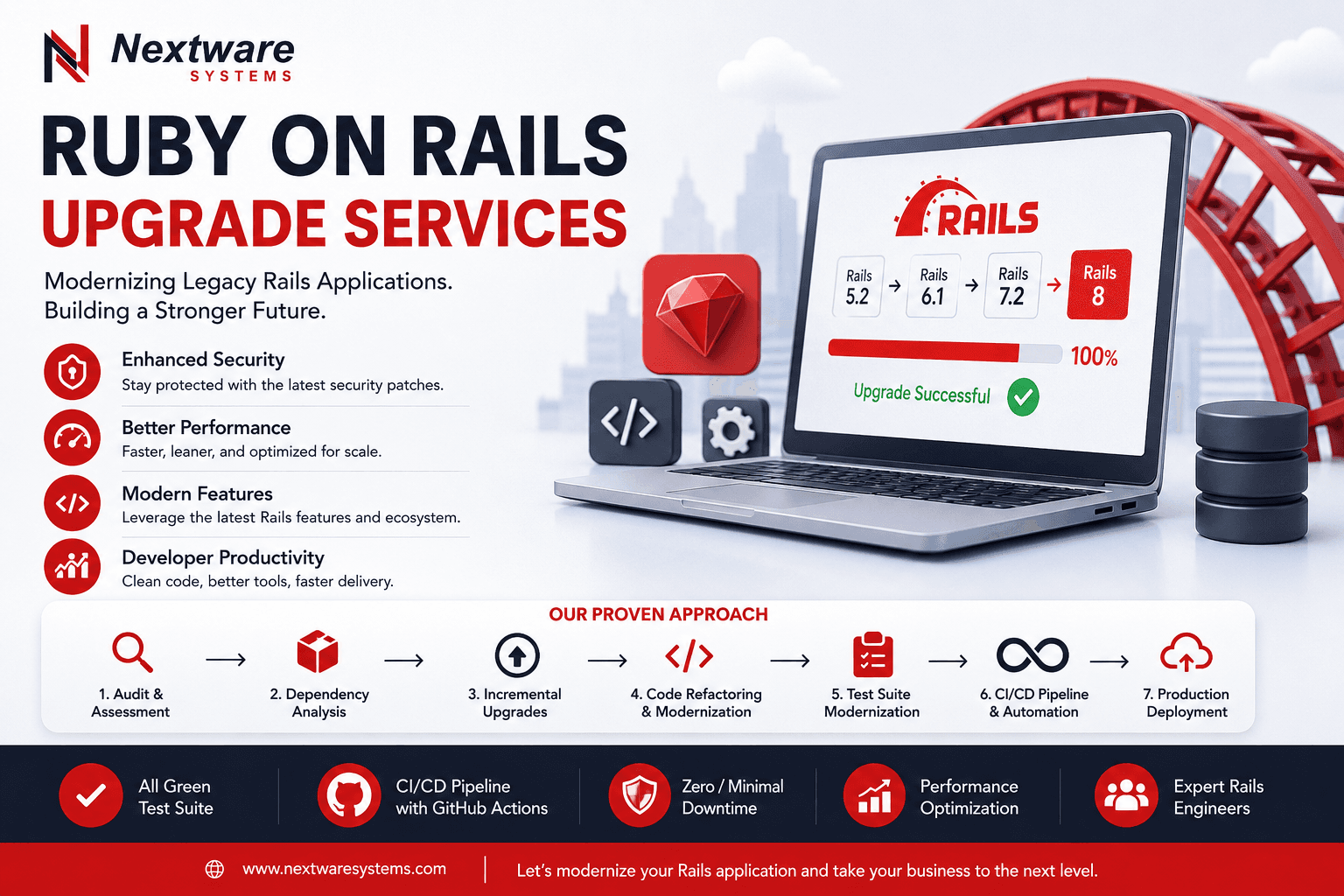
Ruby on Rails Upgrade Services: How Nextware Systems Modernizes Legacy Rails Applications Without Breaking Production
Is Your Ruby on Rails Application Falling Behind?
Read morePopular posts

Background Jobs in Rails 8 with Solid Queue
Solid Queue brings durable, database-backed jobs to Rails by default. Setup, recurring tasks, and when you still want Sidekiq.
Read more
Server Components in Next.js 15: A Practical Mental Model
RSC changes where code runs. A working mental model for fetching, the client boundary, and shipping less JavaScript.
Read more
Deploying with Docker and Kamal on a Plain VPS
Containerize once and deploy anywhere you can SSH. Kamal brings zero-downtime deploys and TLS to a cheap server.
Read more
Rails 8 Is Here: The No-PaaS Default Stack Explained
Rails 8 ships with Kamal 2, Solid Queue, Solid Cache and Propshaft, making a database-only, deploy-anywhere stack the default. Here is what changes.
Read more
0 Comments
Sign in to join the conversation.
Sign-in is not configured yet.